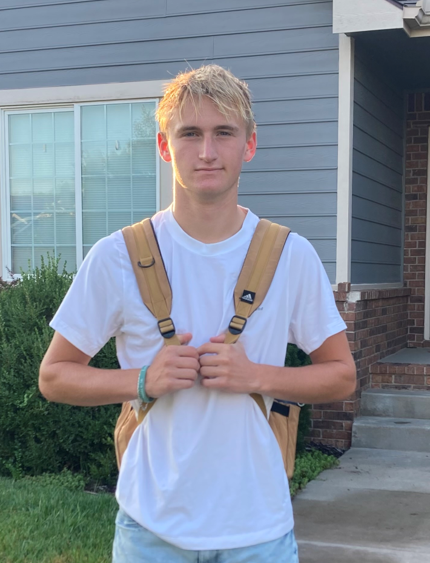

Instead of immediately building mileage and jumping into workouts with his teammates, Derby’s James Lyman has spent much of the offseason focused on something more important: getting healthy.
The road to recovery began during track season, when persistent pain developed in his lower leg.
“About three-fourths of the way in the season, my lower leg began having persistent pain when I ran, then eventually all of the time,” Lyman said.
Initially, Lyman thought the pain was shin splints and believed he could continue training through it. As the discomfort increased, however, he talked with his coach and decided to begin his normal two-week break between seasons early.
The hope was that the additional rest would allow the pain to subside while giving Lyman a head start on summer training.
Instead, the pain returned when he attempted to resume running.
“After several weeks of rest, I tried to begin running, but the pain returned quickly,” Lyman said.
Lyman tried resting again, this time for an even longer period. When that did not solve the problem, his teammates encouraged him to see a physical therapist.
That decision proved to be a turning point.
Following an MRI, Lyman learned he had early signs of a stress fracture. Even after several weeks of rest, the signs of the injury were still present.
“After visiting a physical therapist, I was recommended several steps that would lead me to recovery,” Lyman said.
With prescribed physical therapy, Lyman began to see progress. The pain gradually receded, allowing him to slowly increase his mileage.
“The process of recovery has been very long-winded,” Lyman said. “As I did the prescribed physical therapy, the pain receded, and I have been able to increase my mileage as a result.”
The recovery process has also changed the way Lyman prepares for his senior season. While his teammates have progressed through their normal summer training, Lyman has had to take a much more cautious approach.
“I have been increasing my mileage far slower than everyone else, and am unable to do workouts,” Lyman said.
Although the slower progression has meant less time training with his teammates, it has also given Lyman more time for school and work. More importantly, it has allowed him to prioritize getting back to running without rushing the recovery process.
After dealing with months of uncertainty, Lyman enters his senior season with relatively simple goals. He is not focused on setting an unrealistic time or making dramatic predictions. Instead, he wants to return to the level of performance he knows he is capable of.
“My goals for the season really aren’t that crazy,” Lyman said. “I’m just hoping to either match my PR or beat it by at least 10 seconds.”
For Lyman, reaching that goal would mean more than simply recording a fast time. It would represent the payoff from a long recovery process that forced him to slow down, seek help and rebuild his training one step at a time.
After spending much of the offseason working his way back, simply being healthy enough to compete is an accomplishment in itself.
To nominate someone for a story email [email protected]